
Two Google advertising products sit at the top of a search for a home service. They look similar, they cost money in completely different ways, and contractors routinely treat them as interchangeable. They are not.
One charges when someone contacts you. The other charges when someone clicks. That single difference changes the strategy, the optimization, and which jobs each product is good at winning.
The mechanical difference
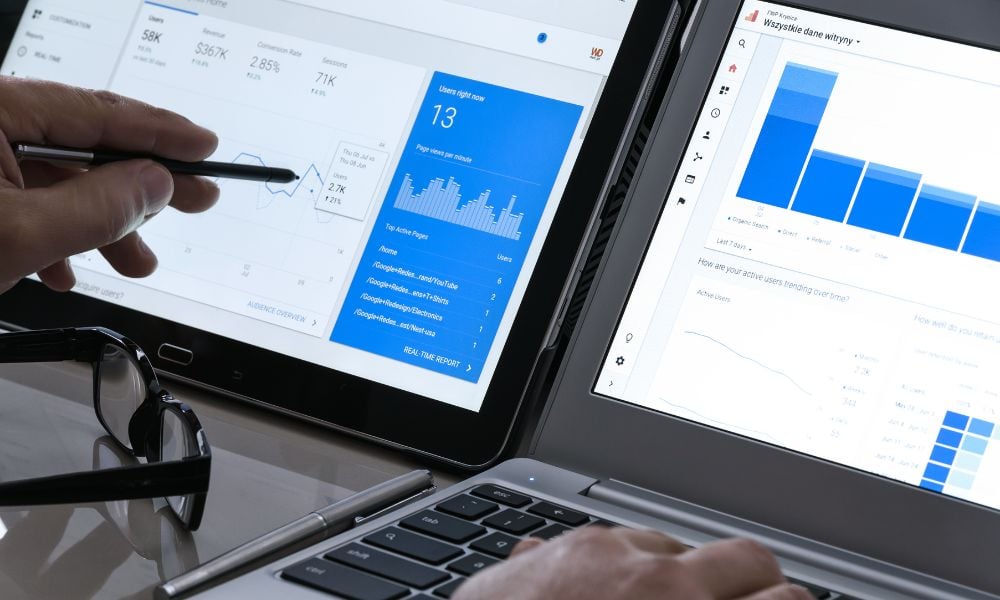
Local Services Ads sit at the very top of the results page, above standard ads. You do not write ad copy and you do not pick keywords. Google matches your profile to searches and charges you when someone calls, messages, or books through the ad. A person who views your profile and leaves costs nothing.
Google Ads sit below them. You choose keywords, write the ads, control the landing page, and pay for every click whether or not that person ever contacts you.
Getting into LSA requires verification. Google checks licensing and insurance and runs background checks before you can run. That process takes time and it is the reason the inventory is less crowded than standard search.
What each one is good at
LSA wins the fast, simple job
Because there are no keywords and no ad copy, you cannot steer it toward a particular kind of work. It matches broadly within your category and it skews toward service and repair calls.
That is a feature for emergency work. Someone with a failed water heater taps the first result with a good star rating and calls. LSA is built for exactly that moment.
Two things determine whether you rank, and neither is your budget. Reviews, both the count and the average, and responsiveness, meaning how often and how fast you answer the leads you receive. Google’s own documentation is explicit that missed calls can hurt your placement. Proximity to the searcher also applies, as it does everywhere in local.
That ranking model has a consequence worth sitting with. A contractor paying for leads and missing half the calls is not just wasting the money on those leads. The missed calls are actively degrading placement, which raises the effective cost of every lead after that. If you are going to run LSA, fix the phone first.
Google Ads wins the specific, high-value job
Keywords are the whole advantage. You can bid on “tankless water heater installation” and not on “water heater repair.” You can send that click to a page built specifically for that job. You can exclude terms that waste money.
That precision is what makes standard search better for planned, high-ticket work: replacements, installations, remodels, generators, repipes. These buyers research, compare, and decide over days or weeks, which means the landing page and the follow-up matter as much as the click.
You also get real measurement. Search terms, devices, times of day, geography, and a conversion path you can instrument properly.
The cost comparison people get wrong
Cost per lead is the number everyone compares, and on its own it is close to meaningless.
A lead you book at a high rate is cheaper than a lead you book at a low one, whatever the invoice says. A forty dollar lead booking at thirty percent costs more per appointment than a sixty dollar lead booking at fifty percent.
Track two numbers instead, for each channel separately:
Cost per booked job. Total spend divided by jobs actually scheduled.
Cost per paying customer, and the average ticket that came with it.
That second pairing is where the picture usually clarifies. LSA and standard search tend to bring in different work. Repair and service calls skew toward LSA. Larger replacement jobs skew toward search. A channel with a higher cost per lead and a much larger average ticket can be the better channel, and comparing cost per lead alone hides that entirely.
Benchmarks published by lead-tracking vendors put home services LSA cost per lead somewhere in the double digits on average, with real variation by trade and market, and legal and healthcare categories running several times higher. Treat any specific figure you read as directional. Your market, your category, and your answer rate move it more than any published average.
Things changing right now
Two developments worth knowing before you plan a budget.
LSA is moving into Google Ads. Google has begun migrating Local Services Ads into the Google Ads platform as pay-per-lead campaign types, with a phased rollout that started in August 2026 for selected US home and storefront service categories. The placement and the pay-per-lead model stay the same. The dashboard, the budget controls, and the bidding change.
The practical effect for a contractor is that the two products stop being managed in separate places, which makes comparing them easier and makes the standalone LSA dashboard a temporary thing to build process around.
The badge and guarantee program has been reworked. Google has been consolidating the Google Guaranteed and Google Screened badges and changing the consumer money-back component. Reporting on exactly what applies where has been inconsistent, so rather than trusting any guide including this one, check what your account currently shows in your own Local Services Ads dashboard before you build a marketing claim around a badge.
How to decide where to start
Start with LSA if: your work is mostly service and repair, you can pass verification, your review count is respectable, and you can genuinely answer the phone. The barrier to entry is the verification, not the skill.
Start with Google Ads if: your margin is in specific high-value jobs, you have or can build proper landing pages, and you have someone competent managing it. Standard search punishes inattention in a way LSA does not.
Run both if you have the volume to support it, which most established contractors do. They cover different searches and different intent.
Run neither yet if your Google Business Profile is incomplete, you have fewer than a couple dozen reviews, or calls are going unanswered. Paid traffic on a weak foundation is an expensive way to discover the foundation is weak.
The disciplines that actually matter
For LSA: answer the phone, dispute invalid leads every month because valid disputes come back as credits, keep your service area tight enough that you are not paying for jobs you cannot profitably serve, and keep review velocity up since it drives placement directly.
For Google Ads: build negative keyword lists and maintain them, send traffic to job-specific pages rather than the homepage, track conversions properly rather than trusting platform-reported numbers, and review search terms regularly.
For both: the lead has to get caught. Paid channels make an intake problem more expensive rather than solving it, which is the same point we made about the gap between the lead and the booking.
The thing neither one replaces
Both products sit on top of your Google Business Profile and your reviews. LSA rankings use them directly. Your map pack position uses them. Your organic visibility depends on the same signals.
Which means the unglamorous local SEO work underneath is not an alternative to paid advertising. It is the thing that makes paid advertising cheaper, and a contractor who neglects it pays more per lead on every channel indefinitely.
We handle lead generation and local SEO for home service businesses across the OKC metro, including HVAC, plumbing, and electrical. You own the accounts and the data. Get in touch if you want help working out which channel your numbers actually support.
More from Design Thumbprint

Your Careers Page Is a Marketing Problem
For most home service businesses and practices, hiring is the real constraint on growth, and the careers page gets a fraction of the attention the homepage does. How to fix that.

What Belongs on a Homepage, and What Doesn’t
A homepage has one job: help a stranger decide quickly whether they are in the right place and what to do next. What earns its place above the fold, and what to cut.

What to Look For in a Marketing Agency Contract
A three-page agency agreement can transfer ownership of everything you pay to have made and renew itself automatically. The ten clauses that matter and what good looks like in each.
Want this kind of thinking applied to your marketing?
We are a boutique agency in Edmond working with businesses across Oklahoma and beyond. If something here raised a question about your own marketing, ask us directly.
- Call
- 405-766-6169
- info@designthumbprint.com