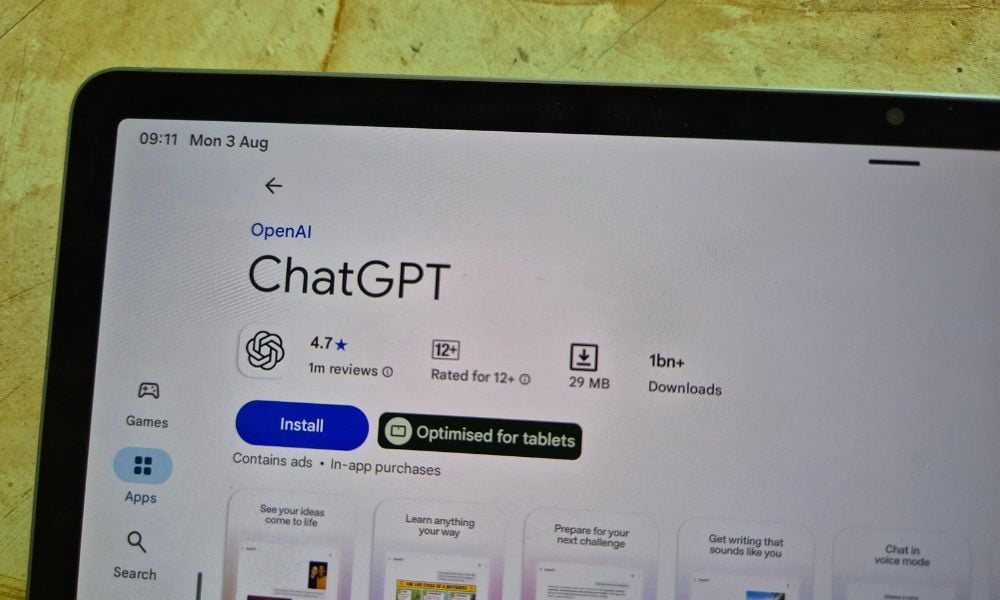
A client called in June because a prospect had told him something unsettling. She had asked ChatGPT for a recommendation in his category, and it named three of his competitors and not him. He ranked second on Google for the same query.
That gap is the whole story of AI search right now. Ranking well and getting cited are related but they are not the same thing, and the mechanics behind the second one are genuinely different.
Here is what is actually known, what is guesswork, and what is worth doing.
A warning about the data
Almost every statistic you will read about AI citations comes from a company selling AI visibility software. The studies are not worthless, but they conflict with each other constantly. One analysis puts Reddit as the most-cited domain across all engines. Another puts YouTube first and Reddit second. A third ranks Wikipedia first and Reddit fourth. Sample sizes, query sets, date ranges, and definitions of a citation all differ.
So treat specific percentages with suspicion, including any you see quoted confidently. What the studies do agree on is direction, and the direction is useful.
The four things the research consistently agrees on
1. Each engine draws from a different pool
This is the finding with the most practical consequence. A business that shows up constantly in Perplexity can be nearly invisible in ChatGPT, and vice versa. Multiple cross-platform analyses have found enormous variance in citation volume for the same brand across engines.
The reason is architectural. ChatGPT’s search layer leans heavily on Bing’s index. Perplexity runs its own index and skews hard toward community and review sources. Google’s AI surfaces pull from Google’s index and show a notable preference for Google-owned properties, YouTube included. Claude tends to favor first-party brand and product sites over community sources.
There is no single “optimize for AI” checkbox. There are several different systems with different appetites.
2. Ranking first no longer guarantees citation
In the earlier days of AI Overviews, the large majority of citations came from pages already ranking in the top ten. That correlation has weakened substantially across successive studies. Google’s AI surfaces now cite pages well outside the first page with some regularity.
What appears to matter more is whether a passage on the page directly and completely answers the question being asked. Which brings us to the most actionable finding.
3. Extractability beats almost everything on-page
These systems are not reading your page the way a person does. They are looking for a self-contained chunk of text that answers a specific question without requiring the surrounding context.
That has concrete implications for how you write:
- Answer the question in the first two sentences under the heading. Not after three paragraphs of throat-clearing about how important the topic is.
- Make headings into actual questions where it reads naturally, matching how someone would phrase it out loud.
- Write self-contained paragraphs. A paragraph that starts with “As mentioned above” cannot be lifted out and used.
- Be specific. Numbers, names, dates, and concrete conditions get extracted. Vague marketing language does not.
- Keep facts current and dated. These systems are aggressive about recency on anything that changes.
This is also, not coincidentally, better writing. The overlap between what an AI system can extract and what a busy human can skim is close to total.
4. Third-party mentions carry unusual weight
Across several studies, how often a brand is mentioned across trusted third-party sources predicted citation better than backlink profile alone. This is the biggest departure from traditional SEO thinking, where the link is the currency.
Here an unlinked mention in a credible place appears to count. Being named in an industry publication, a local news story, a review aggregator, a YouTube video, or a genuinely helpful forum thread all contribute to whether a model considers you a real entity worth naming.
The part written for SaaS that does not apply to you
Nearly all published AEO advice is built on B2B software data, and it gets recycled wholesale for local businesses where it does not fit.
If you are a plumber in Edmond, a law firm in Oklahoma City, or a medspa in Mustang, nobody is asking an AI engine to compare you against competitors in a subreddit. Your queries are local and intent-driven: who does this near me, is this place any good, what does this cost, are they open.
For those queries the source pool looks completely different. It is your Google Business Profile, your reviews, your website, local directories, and local media. Reddit and G2 are essentially irrelevant to you.
Which means the highest-return AI search work for a local business is, somewhat anticlimactically, the same work that drives local SEO: an accurate and complete Business Profile, a real volume of recent reviews, consistent business information everywhere it appears, and service pages that actually answer questions.
What to actually do, in order
Fix your entity consistency first
These models are trying to determine that you are a specific, real organization. Inconsistent information undermines that directly. Same business name, same address format, same phone number, same service descriptions, everywhere. If three phone numbers for your business exist online, you are actively confusing the systems trying to describe you.
Do not skip Bing
Because ChatGPT’s search layer draws on Bing’s index, Bing visibility matters in a way it has not for a decade. Claim your listing, verify your site in Bing Webmaster Tools, and submit your sitemap. Bing allows direct import from Google Business Profile, so this is under an hour of work with outsized return.
Add structured data
Schema markup does not guarantee citation, but it removes ambiguity about who you are, what you offer, where you operate, and what your hours are. Organization, LocalBusiness, Service, and FAQ markup are the useful ones for most businesses. Schema.org defines the vocabulary and Google’s Search Essentials covers implementation.
Restructure your existing pages before writing new ones
Most sites have the answers already, buried in the middle of paragraphs. Pulling those answers up under question-shaped headings is faster than producing new content and usually more effective.
Build a real FAQ, from real questions
Not invented questions. The ones your phone actually receives. Ask whoever answers the phone for the ten questions they field most and write a direct answer to each one. This is the single highest-yield hour available to most businesses.
Get mentioned in places that are not your website
Local news, industry associations, chamber listings, supplier directories, podcast appearances, YouTube. Earned mentions where the source is credible and the context is relevant.
Check what the engines currently say about you
Ask ChatGPT, Perplexity, Gemini, and Claude the ten questions a prospect would ask. Write down whether you appear, what they say, and who gets named instead. Do it again in ninety days. That is a more useful baseline than any tool you could buy, and it costs nothing.
What not to bother with
llms.txt. Widely promoted, and there is currently no verified evidence it affects citation on any major engine. Google has said explicitly it does not use it. We wrote a separate piece on llms.txt because the hype has gotten ahead of the evidence.
Buying an AI visibility tool before you have done the basics. Manual checking answers the same question for free at the scale most local businesses operate at.
Anything promising to inject your brand into model training data. That is not how these systems work and the people selling it know that.
The uncomfortable summary
Most of what makes a business citable is what has always made it findable: a clear identity, consistent information, genuine third-party credibility, and content that answers questions directly.
The changes at the margin are real and worth making. The claim that AI search requires an entirely new discipline is mostly being made by people selling that discipline. If your local SEO is neglected, fixing it will do more for your AI visibility than any AEO tactic will.
We do this work for businesses across Oklahoma, and you own all of it. If you want to know what the engines currently say about your business, ask us and we will run the check with you.
More from Design Thumbprint

Unlock Growth with Design Thumbprint’s Full-Service SEO Suite
In today’s digital-first world, your website is often the first interaction a potential customer has…

SEO Isn’t a One-Time Task—It’s an Ongoing Process
Search engine optimization (SEO) is often pitched like a sprint: “Do a quick audit, fix…

SEO vs. Paid Ads: Which Is Right for Your Business (Or Why You Need Both)
When it comes to growing your business online, two of the most common strategies are…
Want this kind of thinking applied to your marketing?
We are a boutique agency in Edmond working with businesses across Oklahoma and beyond. If something here raised a question about your own marketing, ask us directly.
- Call
- 405-766-6169
- info@designthumbprint.com