
Most electrical contractors market as though they have one business. They have two, and the two barely resemble each other.
One is service work. A breaker keeps tripping, an outlet stopped working, half the kitchen is dark. The customer decides in minutes, the job is worth a few hundred dollars, and the only thing that matters is whether you can come out.
The other is planned work. A panel upgrade, a whole-home rewire, a standby generator, an EV charger, a service upgrade for an addition. The customer researches for weeks, gets multiple bids, and the job is worth thousands.
Running one marketing approach across both means doing each of them badly.
Why the split matters more for electricians than for other trades
Every home service trade has some version of this divide. The electrical version is unusually extreme for three reasons.
The value gap is enormous. The distance between a service call and a generator install is larger than in most trades. Spending the same cost per lead to acquire both is a straightforward way to lose money on one and leave money on the table on the other.
Planned electrical work involves other parties. Permits, inspections, and often the utility. That extends the timeline, adds uncertainty, and gives the homeowner more to be anxious about, which changes what they need to read before they call.
The planned side is growing and changing. EV charging, backup power, solar interconnection, and load management barely existed as consumer categories a decade ago. Demand for them is driven by a homeowner researching something new, which means it is a content-driven category rather than a proximity-driven one.
The service call side
Here the customer has a problem now and very little patience for anything else.
What decides it: who appears in the map pack, who answers, and how fast someone can be there. That is close to the whole list.
Where to spend: Google Business Profile completeness, review volume and recency, and answering the phone. Google’s own local ranking guidance comes down to relevance, distance, and prominence, and distance is the constraint you cannot change. That makes reviews and profile quality the levers you actually have.
What to measure: answer rate by hour, and time from call to dispatch. Nothing else moves the number much.
What not to bother with: long educational content. Nobody with a dead outlet is reading a 1,500-word explainer about GFCI protection before they call someone. Write that content for a different reason, which we will get to.
One honest note. Because the service side is proximity-driven, there is a hard ceiling on how much of a metro you can win. A shop on the north side of the metro will not dominate searches twenty miles south no matter how good the marketing is. Knowing where that line falls saves you from chasing rankings geography will not allow.
The planned work side
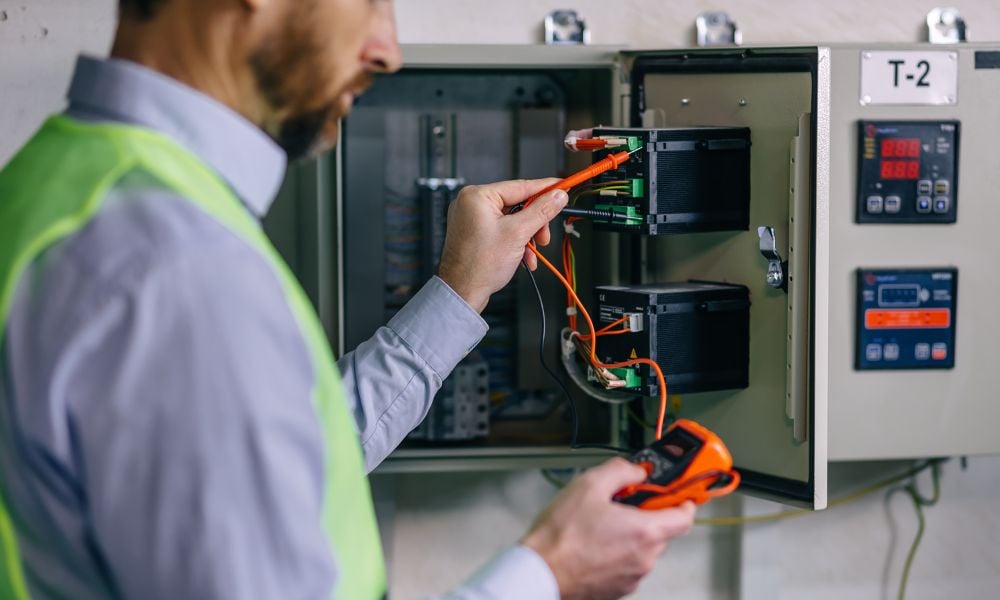
Completely different buyer, completely different process.
Someone considering a panel upgrade or a generator is usually weeks into thinking about it before they contact anyone. They have searched what it costs, whether they need it, what could go wrong, and what the permit process involves. By the time they call, they have opinions.
What decides it: whether you look like the contractor who has done this specific thing many times before. Confidence, not proximity.
Where to spend:
- A real page for each major job type. Not one “residential electrical services” page listing twelve things. A page about panel upgrades that explains why a home needs one, how you tell, what the process involves, how long the power is off, and what the inspection looks like. Then the same for generators, EV charging, and rewires.
- Photos of your own completed work. A clean, labeled panel says more about your standards than any claim on the page. This is one of the highest-return things an electrical contractor can do and almost nobody does it.
- Straight answers about permits and inspections. This is the top anxiety on high-ticket electrical work and the most under-served topic. A contractor who explains it plainly reads as someone who does it routinely.
- Financing information, stated clearly. On a five-figure job, whether financing exists is often the actual decision point, and burying it costs you the call.
- Follow-up that runs on its own. Multi-bid jobs close over weeks, not days. A quote sent with no sequence behind it is a quote competing against contractors who follow up.
What to measure: quote-to-close rate and days between quote and decision, tracked separately from service work. Blending the two hides both.
The EV and backup power opportunity
Worth calling out separately because the search behavior is unusual.
Homeowners researching EV charger installation or standby generators are doing genuinely uncertain research. They do not know what they need, what it costs, whether their panel can handle it, or what the utility requires. That produces an enormous volume of question-shaped searches.
Very few electrical contractors have written anything useful about it. Most have a paragraph saying they install EV chargers, which answers none of the actual questions.
The questions worth answering: can my existing panel support this, what is the difference between charging levels in practical terms, what does the permit and inspection process look like locally, how is the generator sized, what gets powered and what does not, and what maintenance follows.
This is also the content most likely to be surfaced by AI search, because these are direct questions with direct answers, which is exactly what those systems extract.
Commercial, which is a third business
If you do commercial work, it does not belong mixed into residential pages.
The buyer is a property manager, a general contractor, or a facilities lead. They are looking for scope capability, licensing, insurance limits, bonding, and whether you can staff a job on a schedule. They are not reading your homeowner content and they do not care about your emergency response time for residential calls.
A separate section, written for that buyer, with project examples and the credentials they screen on. Mixing the two makes both audiences less confident.
How to split the budget
A rough starting frame for a residential-focused contractor.
Service work takes the local visibility spend: profile management, review generation, and the phone answering that converts it. This is mostly a fixed ongoing cost and it should be funded first, because it produces the calls that keep the schedule full.
Planned work takes the content and creative spend: job-type pages, project photography, and the follow-up system. This compounds slowly and it is where the margin is.
The common failure is funding only the first. A contractor with excellent local visibility and no planned-work content ends up with a schedule full of low-value service calls and a competitor winning every generator job in the county.
The less common failure, but a real one, is a beautiful website with no review velocity behind it. The phone does not ring and nobody reads the content.
The one thing both sides share
Whatever comes in has to get caught. A service call that goes to voicemail and a quote that never gets followed up are the same failure wearing different clothes, and both are more expensive than any advertising decision on this page.
We wrote about that gap in detail for HVAC companies, and the mechanics are identical for electrical contractors. Fix the catching before you increase the volume.
We handle electrician marketing and SEO across the OKC metro, including the lead generation and follow-up systems behind it, and you own all of it. Get in touch if you want help separating the two sides of your business.
More from Design Thumbprint

How a Strong Content Marketing Strategy Can Drive Traffic and Sales
When it comes to digital growth, content is king—but only when it’s done with purpose.…

Why Professional Website Design Still Matters (And How It Affects SEO)
Design and SEO overlap in specific, technical ways, and in fewer ways than agencies usually claim. Where the overlap is real, two myths worth dropping, and how to test your own site.

How We Grew Bourbon for the Cause to nearly 58K on TikTok (Without Chasing Every Trend)
What is Bourbon for the Cause? Bourbon for the Cause is where bourbon culture meets…
Want this kind of thinking applied to your marketing?
We are a boutique agency in Edmond working with businesses across Oklahoma and beyond. If something here raised a question about your own marketing, ask us directly.
- Call
- 405-766-6169
- info@designthumbprint.com